SEO trends & explainers
Kyoom regularly publishes explainers on SEO trends and the latest changes in search. Here’s a summary of the most recent posts.
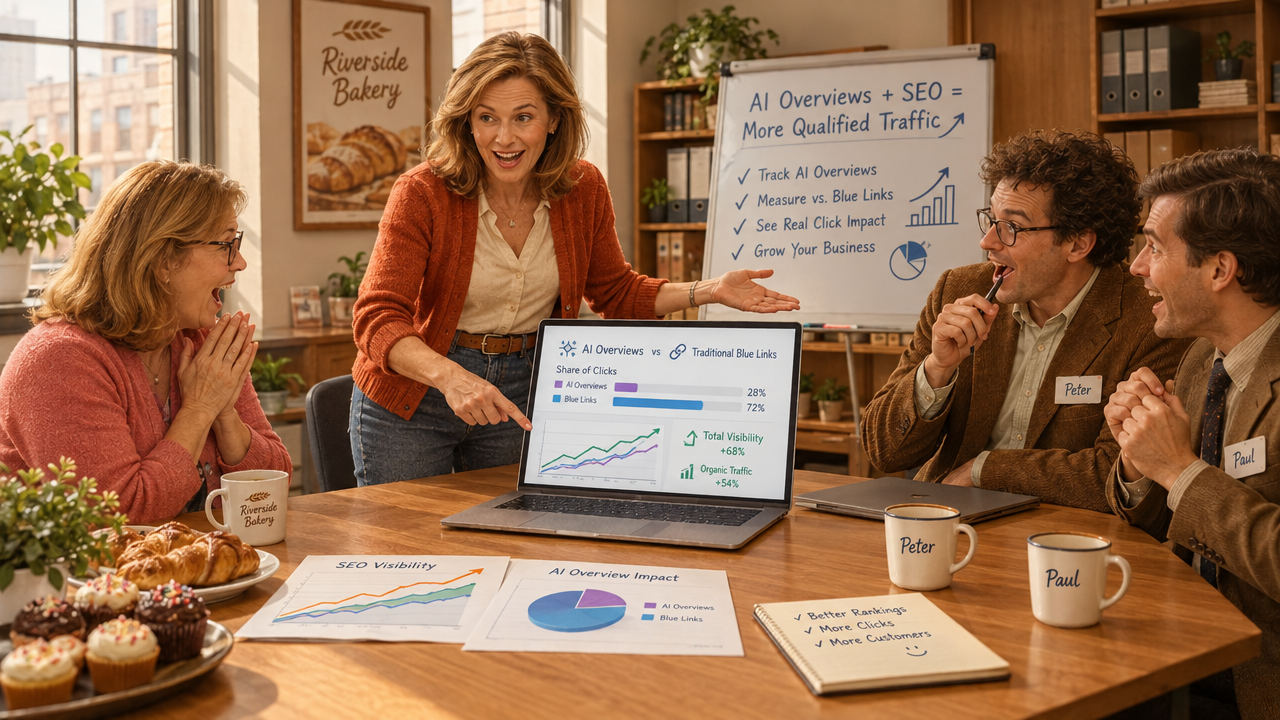
5 articles
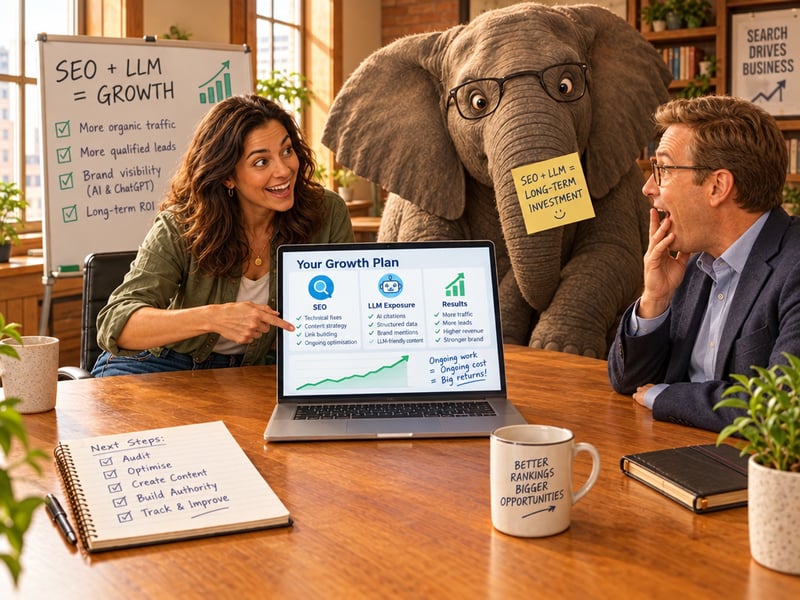
A 2020-style SEO budget now covers roughly half the job. Keywords have given way to topics and entities, every page is effectively written twice (copy for people, schema for machines), llms.txt sits beside sitemap.xml, and schema and entity maps drift over time – so SEO needs ongoing maintenance, like hosting, rather than one-off sprints.
Key takeaways
- Plan around topics and entities; keywords now serve the topic
- Keep schema in step with page copy – mismatches quietly weaken trust
- Add llms.txt at launch and review it when site structure changes
- Track AI Overview sources, LLM brand descriptions and competitor citations alongside clicks
- Backlinks now do two jobs: authority and AI citation presence
- AI speeds up individual tasks but lengthens the overall process
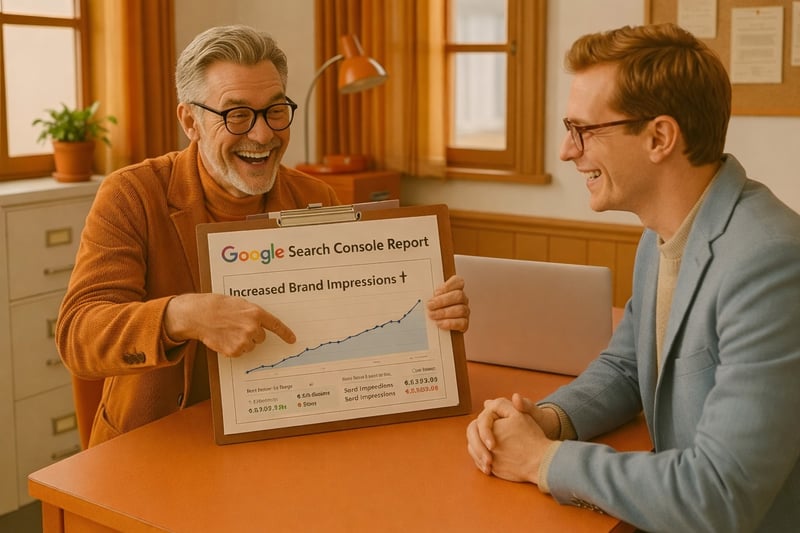
Weekly rank reports capture one personalised snapshot of a crowded results page and say little about business performance. The post explains where average position still helps, why the Countries report and canonicalisation checks deserve more attention, and sets out a monthly Google Search Console review framework built on impressions, brand queries, CTR and index coverage.
Key takeaways
- Rankings vary by location, device and time – one snapshot isn't the truth
- Use average position only for filtered pages or core keyword sets
- Filter by country to separate relevant from irrelevant visibility
- Spot cannibalisation in GSC; fix with canonicals, merge-and-redirect, differentiation or internal links
- Track impressions, brand queries, CTR by query type and index coverage
- Fewer, better-qualified clicks can mean more conversions

A plain-English glossary for non-specialists who meet search jargon in pitches, decks and LinkedIn posts. Acronyms are grouped by length – two, three and four letters – spanning SEO, AI search (LLM, AEO, GEO, SGE), conversion, hosting, content frameworks and measurement. Assembled with AI help and pitched partly as buzzword bingo.
Key takeaways
- Aimed at business owners making marketing decisions, not specialists
- AEO targets AI answers and featured snippets; GEO targets generative AI engines specifically
- EEAT extends EAT with first-hand experience
- Funnel terms (TOFU / MOFU / BOFU) map content to intent
- Many terms come from paid, UX and hosting but still affect organic search

A short rebuttal to the recurring 'SEO is dead' headline. Organic clicks and CTR are falling as AI results answer basic questions, but AI often delivers only the basics, and sometimes gets them wrong. Compelling content still earns clicks and gets picked up by AI, so practitioners should lean into the shift and build new skills.
Key takeaways
- 'SEO is dead' headlines are attention-seeking, not analysis
- AI summaries cover the basics – depth and originality still earn clicks
- Strong content creates a virtuous loop: AI pickup, brand awareness, better paid conversion
- Time has shifted from analysing algorithms to writing content
- Buyer behaviour hasn't changed – how visibility is earned has

Uses The Matrix as a metaphor for an SEO career: the blue pill of outdated tactics (keyword stuffing, volume link building) versus the red pill of continuous learning and adapting to AI-led ranking. Covers forces reshaping search, the mindset of adaptive practitioners, where search is heading and the ethical questions it raises.
Key takeaways
- Treat search as a shifting ecosystem, not a fixed rulebook
- Look past vanity metrics to business outcomes
- Combine technical, content and UX thinking
- Use AI for ideation, then apply editorial judgement
- Weigh privacy, transparency and algorithmic bias