
A particular kind of unease takes hold when a client goes too quiet. You send an email. Nothing comes back. A follow-up gets the same result. Your phone call lands in voicemail again. Somewhere between the third and fourth attempt you start to wonder whether the absence of words is itself a form of communication. So what is actually being said, and why does no one ever choose to say it directly?
Agency relationships end all the time. Sometimes with a crash, sometimes with a polite handover document and a LinkedIn recommendation. But more often than not, they end with that slow fade, ignored emails, and a growing pile of unanswered messages that nobody wants to acknowledge.
Why does this happen?
When the Overwhelming Becomes Avoidance
We all know that running a business is relentless. For many clients, the day-to-day grind of operations, sales calls, staff issues, and cashflow management leaves almost no mental bandwidth for thinking about marketing strategy. When you are firefighting constantly, an email asking you to review a content plan or approve a revised URL structure feels like an extra burden arriving from another planet. It feels like more work.
This is not down to laziness. It is a genuine capacity problem, and it tends to slowly compound until the relationship has stalled without either party formally acknowledging it.
SEO makes this worse than most disciplines. Presenting a client with a recommendation to restructure their content, consolidate duplicate pages, revise internal linking, and update their metadata is entirely rational from a technical standpoint. From the client's standpoint, it reads like asking to reorganise their house while they are still living in it. Even when a client fully accepts that something needs doing, the perceived effort of doing it creates enough friction to justify another week of inaction. Then another.
The client who hired you with genuine enthusiasm three months ago may now be drowning in Q3 pressures, a difficult employee, or a supplier relationship that is falling apart. Marketing becomes the thing they will get to when things calm down. Things rarely calm down. Weeks of non-response become a month. A month becomes two. By the time the client turns up again, the momentum built together has gone, and the strategy now sits in a shared folder, skimmed over, but not implemented.
A smaller, sequenced actions with clear ownership often break this cycle. But only if the relationship is still communicating well enough to have that conversation, and unfortunately that window closes faster than most agencies would like. One thing is for certain, the relationship will end at some point, it always does.
Misunderstanding, Disengagement, and the Strategic Decision to Leave
Not every client arrives at an agency relationship with a clear understanding of what digital marketing actually does for their business. You would have heard "I don't have a clue what your talking about", it's fair, it's honest and an inevitable truth. Some folk don't get it, or not in the way you could communicate it to them. Some have been through a previous agency experience that left them sceptical. Others treat the whole thing like a broadband contract, its something that runs in the background that they have paid for and they expect it to handle itself.
When you reach out asking for input on a strategic decision, requesting content approval, or flagging something technically urgent, the client who has never fully connected your work to their revenue finds it easy to deprioritise the request. To them, it is not urgent or not as urgent as other things. Early in the relationship, novelty carries its own energy. Everyone is engaged. Over time, that novelty wears off, and unless the agency has consistently explained the reasoning behind each recommendation, the client's attention drifts with it.
Then there is the edgier version of this: the client who has already decided to leave but has not said so.
This one is not a failure in communication. It is a deliberate choice. When a client who was previously responsive begins going quiet, the most pointed explanation is often that they have started conversations with another agency and are letting the current relationship expire on its own terms. Nobody wants to have the ending conversation. It is awkward, it implies criticism, and ghosting is simply easier.
The signs arrive in a particular sequence. Replies get slower. Answers get shorter. Calls that used to get returned the same day sit unreturned for a week. Approvals that previously took a day take three weeks. Then the requests stop entirely. By the time anything formal is communicated, the decision was made long before the silence began.
Both of these situations, the disengaged client and the quietly departing one, share a common thread. The relationship has lost its shared purpose. One party stopped seeing the value. The other stopped feeling heard. And neither said anything until the gap became too wide to close.
When Silence Is a Strategy, Rather than a Symptom
This section sits apart from the others because the motivation is categorically different.
When a client knows they owe outstanding fees and has decided they are not going to pay them, disappearing becomes their default response. They stop answering emails because they do not want to be invoiced again. They stop taking calls because they do not want to explain why the last invoice remains unpaid. The silence here is not passive disengagement. It is an active tactic, and experienced agency people recognise the pattern quickly even if they are reluctant to call it out.
Payment avoidance at the end of a contract is rarely a first offence. Clients who exit agency relationships this way tend to have done it before, and will likely do it again with whoever comes next. Strong payment terms, clear invoicing, and clear contractual language around outstanding fees are the only solutions for this. None of them make the conversation easy, but they do determine how exposed you are when the silence starts.
Who Was Responsible, and Why It Probably Does Not Matter as Much as You Think
Every ended relationship leaves behind a question that is easy to obsess over. Was it you? Was it them? Did you undersell the value of your work? Was our work good enough? Did they misrepresent their appetite for change when they signed? Were the expectations unrealistic from the very beginning?
Blame rarely falls cleanly on one side, and spending energy trying to assign the blame tells you more about the need for closure than it does about what actually went wrong.
Most closed relationships contain contributions from both sides. An agency that assumed the client understood the technical complexity of the work without checking that assumption consistently. A client who agreed to a scope of work they had no real intention of implementing once the reality of it landed. The two parties used identical language to describe completely different expectations, each convinced the other understood what was actually never said.
Consider what that actually looks like in practice. The agency sends a strategy document and assumes that client sign-off means genuine understanding and intent to implement the strategy. The client signs off because they trust the agency and do not want to admit they find the document overwhelming. Three months later, nothing has moved. Both sides are quietly frustrated. Neither has said the thing that needed saying.
That isn't a failure of expertise. What failed was not the expertise on either side, but the structure around how the work was understood, communicated, and acted upon. It is far more common than anyone in this industry likes to admit publicly.
Some endings, though, have nothing to do with the quality of the work or the health of the relationship. A business changes its strategy. A marketing director leaves and their replacement brings a preferred supplier. The budget gets restructured and the retainer is the first line item to go. Internal capability grows to the point where outside support becomes genuinely unnecessary. These endings are not personal. They are not preventable. They are the natural conclusion of a relationship that served its purpose and reached its end.
Why Agency Relationships Have a Natural Lifespan
There is a broader truth sitting underneath all of this, and it is one the industry tends to avoid because it is commercially uncomfortable. Agency and client relationships have a natural lifespan. We all get sacked at some point. The intensity of early engagement, the shared excitement of a strategy launch, and the energy of early wins are genuinely difficult to sustain across years. Familiarity breeds complacency on both sides. The agency starts assuming the client is satisfied because no complaint has arrived. The client starts quietly questioning whether the ongoing investment still justifies itself.
Markets shift. Tools evolve. Competitors change the landscape. What required an outside specialist eighteen months ago becomes manageable in-house as teams grow and develop. None of this is a sign of failure. It is a sign of a relationship that completed what it set out to do.
Agencies that handle this cycle with the least damage are the ones that accept it structurally rather than fighting it emotionally. They communicate value continuously rather than defensively, only when the relationship is under threat. They stay proactive rather than reactive, raising difficult conversations before silence forces the issue. They build their commercial model around a healthy pipeline rather than a handful of long-term retainers held together by inertia or assumptions.
Reading that information early, naming it honestly, and responding with some clarity rather than anxiety is the difference between an agency that manages endings well and one that is surprised by when a client decides to leave. Most of us have been on both sides of this outcome. Agency life is difficult at times, it’s all about reading signals and knowing the party is about to end. Nothing lasts for ever.
More insights from the blog
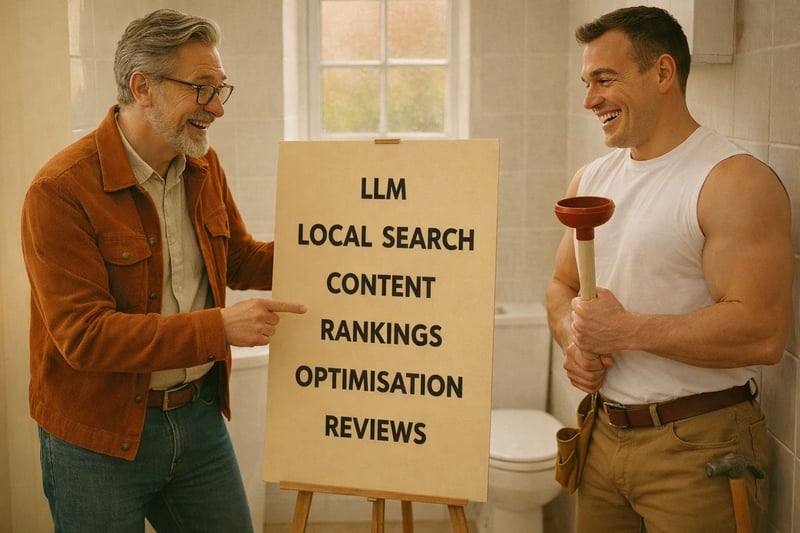
Why Builders, Plumbers, and Contractors Are Losing Customers to AI
When someone types "best plumber near me" or" commercial roofing contractor" into Google today, they do not always get a simple list of blue links. More often, they get an AI-generated answer at the top, assembled from content that AI engines have already read, assessed, and summarised.


Still have questions? Get in touch for a free strategy session.